
Speakers

SHANGHAI • CHINA


Yuequan Bao is a full professor at Harbin Institute of Technology. He is a recipient of the NSFC Young Scientist Scheme (Type A). He has made innovative contributions to SHM data science, including anomaly diagnosis, dynamic inversion, and reliability evaluation, and has established a mechanics-informed machine learning theory that significantly improves structural health diagnosis and assessment. His research accomplishments have been successfully applied to 30 major engineering structures. He has received the Second Prize of the State Scientific and Technological Progress Award (ranked 5), five first prizes of provincial and society-level science and technology awards, and 2026 SHM Person of the Year Award. He has published 80 SCI-indexed papers, 3 monographs and textbooks, and contributed to development of 6 specifications. He has been named to the 2024 and 2025 Top 2% Scientists List (Career-long) released by Stanford University. He also serves as a committed member of ISHMII, executive editor of Intelligent Computing for Engineering, and associate editor of Structural Health Monitoring.

Prof. Wing Chiu is a member of the academic staff at the Department of Mechanical & Aerospace Engineering, Monash University. His research interests are in structural mechanics, structural health monitoring, and advanced composite structures. He has long-standing research collaborations with researchers from Australia, the USA, Europe, Singapore and Indonesia. Chiu’s work on structural health monitoring of aerospace structures has led him to extend it to civil and biomedical structures. He is one of the founding co-chairs of the Asia Pacific Workshop on Structural Health Monitoring. He is a member of the Editorial Boards of two international journals: Polymers and Polymer Composites, and the International Journal of Structural Health Monitoring. Chiu applies his engineering knowledge to solve everyday problems through professional engineering consultancies specialising in noise and vibration engineering. He is passionate about undergraduate education and about infusing his engineering courses with solutions to real-world engineering issues.
Prof. Younho Cho is a Professor in the School of Mechanical Design and Engineering at Pusan National University (PNU), South Korea. Since 2004, he has been a leading figure in the field of Non-Destructive Testing (NDT) and structural integrity. Dr. Cho recently concluded a distinguished term as the President of the 20th World Conference on Non-Destructive Testing (WCNDT), a role he held from 2016 to 2024. His leadership extends to several high-level committees, including serving as the Vice President of the Korean Society of Mechanical Engineers (KSME) and as a Commissioner for the National Standards Expert Committee (ISO/TC 135/SC3 WG6).
Beyond his administrative leadership, Dr. Cho is a globally recognized expert in ultrasonic guided wave propagation and structural health monitoring (SHM). His research focuses on the development of long-range pipe real-time inspection systems and advanced tomography imaging for power plant facilities. His laboratory has pioneered techniques in nonlinear acoustics for detecting micro-closed cracks and has expanded the application of ultrasound into biological fields, such as measuring human bone mineral density. Most recently, his work has focused on implementing guided wave inspection techniques for high-speed rail infrastructure and composite aircraft structures, bridging the gap between fundamental wave mechanics and critical industrial applications.
Dr. Zheng Fan is an associate professor in the School of Mechanical and Aerospace Engineering at Nanyang Technological University, Singapore. He earned his Ph.D. degree in Mechanical Engineering from Imperial College London in 2010, and his Bachelor's and Master's degrees in Acoustics from Nanjing University in 2004 and 2006, respectively. Currently, he leads a research team dedicated to developing novel techniques for the non-destructive evaluation, structural health monitoring, and sound manipulation. His work integrates advanced physics and modeling techniques with the development of technologies that can be rapidly deployed in practical settings. Dr. Fan maintains strong links with global industry, collaborating with major companies such as Rolls-Royce, Shell, Lloyd's Register, EDF, and Sembcorp, etc. His research spans from thorough investigations of fundamental theories to the application of science in addressing real-world challenges. The results of his work have been published in over 100 papers in top tier journals. He holds a few international patents and has successfully licensed these technologies to industry partners. In 2018, Dr. Fan was awarded the Achenbach Medal for his outstanding contributions to structural health monitoring. Since 2020, he has been ranked among the world's top 2% of scientists by Stanford University. Dr. Fan also serves as an Associate Editor for "Structural Health Monitoring – An International Journal" and "Ultrasonics," two leading journals in his field.

Evgeny Glushkov is a Principal Investigator of the Institute for Mathematics, Mechanics and Informatics and Professor of the Department of Computer Technologies and Applied Mathematics, Kuban State University, Krasnodar, Russia. He received his PhD and DrSc degrees (Phys-Math) for the research in wave processes in solids and structures from the Rostov State University in 1978 and Leningrad State University in 1988, respectively; Laureate of the Russian State Prize for Science and Technology, 2002. Currently, his research interests focus on resonance wave phenomena, the evaluation of material properties based on wave probing data, and wave dynamics of piezoelectric smart structures. He has published over 50 articles in high-ranking journals (Ultrasonics, JASA, Smart Materials and Structures, Sound and Vibration, Wave Motion, etc.) and two monographs.
Full Professor for Materials Science at the Department of Aeronautics, Universidad Politecnica de Madrid (UPM), since 1989. Director of the Aerospace Materials and Processes Department, UPM, and currently Emeritus Professor.
Topics of current research interests include, shape sensing, CFRP composites, Fibre Optic Sensors (FBG, OBR), damage detection from strain measurements, smart processing of composites.
Selected achievements and honors include: Advisor of the Spanish Ministry of Science and Technology for the ‘Materials Science Research Program’, 2002-2004. President of the Spanish Composite Association, 2008-2013.
Associate Editor of two international journals related to Composites and Smart Structures. Chairman of the ‘EWSHM2006’ Granada, Spain, and ‘EWSHM2016’ Bilbao, Spain; Co-Chairman of the Inttnal Workshops on SHM (IWSHM, Stanford) from 1997 (biennial), and for the LATAM-SHM conferences (Cartagena 2023, Santiago de Chile 2026).
In September 2011 at Stanford (CA), during the IWSHM, Prof. Güemes received from BOEING the ‘SHM Lifetime Achievements Award’ for his contributions to this technology.
He has also been a supervisor of 11 PhD Thesis during last 15 years, and supervises around 5 MSc theses per year. He authored over 200 peer reviewed journal papers, 2 patents and several book contributions; he is co-editor of the book: "New Trends in Structural Health Monitoring" (2013).
is a Distinguished Professor with the School of Mechanical Engineering, Shanghai Jiao Tong University, China. He received his B.E. and Ph.D. degrees in Mechanical Engineering from the University of Science and Technology of China. His research interests include a combination of vibration analysis, signal processing, and smart structures for intelligent sensing, diagnosis, and maintenance of complex machines. He has published more than 170 peer-reviewed journal papers, including Nature Communications, Matter, and IEEE Transactions. He has been selected in the list of Chinese Most Cited Researchers by Elsevier since 2020. He is a recipient of National High-Level Leading Talents and National Young Professionals in China, and Shanghai Outstanding Academic Leaders. He is an Associate Editor of Frontiers in Physics and Chinese Journal of Mechanical Engineering. He is an IEEE Senior Member and serves as Chair of Nanjing/Shanghai/Wuhan Joint Section Chapter of IEEE Instrumentation and Measurement Society, and Deputy Director of the Dynamic Testing Professional Committee of the Chinese Society for Vibration Engineering.
Xiaobin Hong is a full professor and Dean of the School of Mechanical and Automotive Engineering at South China University of Technology. He is a Yangtze River Distinguished Professor, Guangdong Pearl River Distinguished Professor, and a recipient of the Guangdong Outstanding Young Scientist Fund. He has made innovative contributions to ultrasonic guided wave nondestructive testing and structural health monitoring, including multi-modal guided wave focusing, array guided wave full-field imaging, and ultrasonic guided wave migration detection, and has developed transfer learning detection theories and methodologies that significantly advance damage characterization and quantitative evaluation of complex multi-layered structures. His research accomplishments have been successfully applied to marine engineering equipment, high-speed railway infrastructures, and military engineering facilities. He has received eight provincial and ministerial-level academic awards, including the First Prize of Guangdong Science and Technology Progress Award, the First Prize of China Machinery Industry Science and Technology Progress Award, China Patent Excellence Award, and Guangdong Outstanding Inventor Award. He has published over 110 SCI papers and 3 monographs, and has contributed to the formulation of multiple industrial specifications. He has been named to the 2024, 2025 and 2026 Top 2% Scientists List released by Stanford University. He serves as Chairman of the Nondestructive Testing Committee of Guangdong Mechanical Engineering Society, and a committee member of multiple national academic societies. He also acts as Associate Editor of IEEE Sensors Journal and Executive Subject Editor of Optics and Precision Engineering.
Prof. Ning Hu is the Director of Interdisciplinary Research Institute of Advanced Intelligent Equipment, Xihua University, China. He is a National High-Level Talent Expert, an Expert Entitled to Special Government Allowance from the State Council and a recipient of the National Science Fund for Distinguished Young Scholars.
He has long dedicated himself to interdisciplinary research spanning solids mechanics, mechanical engineering, and composite materials. His academic career includes positions at several prestigious institutions, including Tsinghua University, Tohoku University (Japan), Johns Hopkins University (USA), Chiba University (Japan), Chongqing University (China), etc. He has published 5 books and been granted over 50 patents. He has authored more than 800 peer-reviewed journal papers, which have accumulated over 30,000 citations, with an H-index of 82 (Scopus). He has been recognized as a Highly Cited Chinese Researcher by Elsevier every year since 2014. In the past two years, he has also been featured on the "World's Top 0.05% Most-Cited Scientists" list (ScholarGPS Meta Analytics LLC, ranked 125th globally in Mechanical Engineering) and the "World's Best Scientists" list (Research.com, ranked 157th globally, and 19th within Hong Kong, Macau, and Mainland China, in Mechanical & Aerospace Engineering). His significant awards include the National Science and Technology Achievement Award, Du Qinghua Medal and Award for Mechanics and Engineering, Wiley China High Contribution Author Award in Science, the First-class Prize of Natural Science of Hebei Province, and the First-class Prize of Technological Invention of Hebei Province.
Kyung‑Young Jhang He received the B.S. and M.S. degrees in Precision Mechanical Engineering from Hanyang University, Seoul, Korea, in 1983 and 1985, respectively, and the Ph.D. degree in Precision Mechanical Systems from Tokyo Institute of Technology, Japan, in 1991. Since 1992, he has been a professor at Hanyang University, Seoul, Korea. He served as President of the Korean Society for Nondestructive Testing from 2024 to 2025.
His research interests include ultrasonic nondestructive evaluation, laser ultrasonics, and signal processing. He is internationally recognized for his contributions to nonlinear ultrasonics. His paper published in the International Journal of Precision Engineering and Manufacturing in 2009 has been cited more than 900 times and received the Most Cited Article Award. He received the Minister's Award from the Ministry of Trade, Industry and Energy in 2015 and was awarded a government medal in 2026 for his contributions to science and technology.
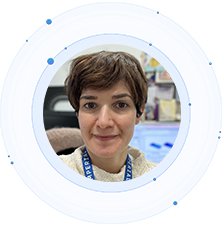
Zahra Sharif Khodaei is Professor of Aerospace Structural Durability and Health Monitoring at Imperial College London and co-founder of the Structural Integrity and Health Monitoring Group (SI&HM) within the Department of Aeronautics. Her research focuses on digital twins for the lifecycle health management of engineering assets, integrating physics-based models with load, displacement and damage data acquired through piezoelectric, fibre-optic and printed sensors. She leads experimental and computational research in structural diagnosis, prognosis and decision support for composite aerospace and space structures, collaborating with Rolls-Royce, the European Space Agency and European research partners. She is the first female professor in Imperial’s Department of Aeronautics and a Fellow of both the Royal Aeronautical Society and the Women’s Engineering Society.
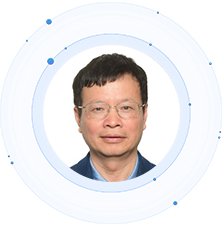
Prof. Ying Lei is currently a chair professor of civil engineering at the school of architecture and civil engineering, Xiamen University. His research area include structural health monitoring, structural system identification, structural control and stochastic structural dynamics, etc.. He is the authors of over 300 academic papers and has gained the National Natural Science award by the Chinese Council and other research awards. He has continuously been“World’s 2% Top Scientists” released by Stanford University, and is currently serving as a council member of the International Society for Structural Health Monitoring of Intelligent Infrastructure, council member of Chinese Society for Vibration Engineering, vice director of the random vibration technical committee of the Chinese Society for Vibration Engineering, and vice director of the Equipment Structural Health Monitoring and Prognostics committee of China Instrument and Control Society, etc.
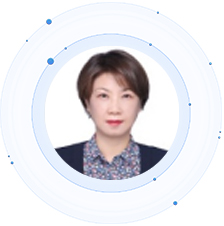
Zheng Li is a Professor in the School of Mechanics & Engineering Science at Peking University. Dr. Li earned her Ph.D., M.S. and B.S. in Solid Mechanics from Peking University. Dr. Li held visiting professorship with UMIST, University of Nebraska-Lincoln, University of Pittsburgh, University of Burgundy- ISAT and The University of Sydney. Her research focuses on nondestructive testing methods based on guided waves & vibrations, and metamaterials & phononic crystals for wave manipulation and vibration reduction, and has authored over 120 articles in high-ranking journals (International Journal of Mechanical Science, Composite Structures, Thin-Walled Structures, Mechanical Systems and Signal Processing, Nature Communications, etc.). Her work has earned a 2nd-class Award in Science and Technology Achievement of Chinese Machine and Electricity Ministry, and Jean-Marie Lehn Award in POLY-CHAR 2022.
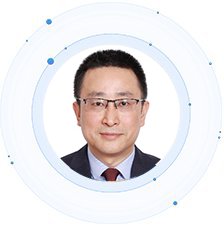
Dr. and Prof. Zenghua Liu is currently a Professor in the School of Information Science and Technology, Beijing University of Technology, Beijing, China. He has authored and co-authored over 260 papers, 50 patents, and 4 books. He was listed among the world’s top 2% of scientists for the years 2024–2026. He currently serves as the Chairman of the Ultrasonic Section of the Chinese Society for Nondestructive Testing (CHSNDT), Executive Director of the Equipment Structural Health Monitoring and Prognostics Institution under the China Instrument and Control Society (CIS), and Member and Deputy Secretary-General of the National Working Group on Standardization of Equipment Structural Health Monitoring of China. He is an Associate Editor of Nondestructive Testing and Evaluation and an Editor of Ultrasonics. He also serves as Associate Editor-in-Chief of Nondestructive Testing, an Editor of the Journal of Beijing University of Technology, and an Editor of Measurement and Control Technology. His research interests include nondestructive testing and evaluation, structural health monitoring, material characterization, ultrasonic imaging, ultrasonic guided waves, electromagnetic acoustic transducers, signal processing, and THz inspection.
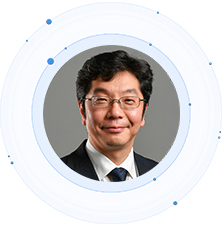
Hideaki Murayama received the B.E., M.E., and Dr.Eng. degrees in naval architecture and ocean engineering from the University of Tokyo (UTokyo), Tokyo, Japan, in 1996, 1998, and 2001, respectively. He has applied fiber-optic sensors to structural health monitoring (SHM) and digital twin of ships, airplanes, infrastructures and lightweight structures. He joined the National Space Development Agency of Japan as a Research Fellow in 2001 and moved to UTokyo in 2003 as a Lecturer. He became a Professor with the Department of Ocean Technology, Policy, and Environment, Graduate School of Frontier Sciences at 2017. He has been a director of Maritime and Ocean Digital Engineering Laboratory (MODE) since 2022, and working for Department of Systems Innovation, Graduate School of Engineering since 2025. He is studying on fiber optic sensor networks, diagnosis/prognosis techniques based on inverse analysis or artificial intelligence, and lightweight materials/structures made from carbon fibers applied not only to offshore structures and marine vessels but also to aircrafts, space vehicles, infrastructures, and robots. He is an expert member of IEC SC86C/WG2 on fiber optic sensors and chairing the mirror committee of Japan. Prof. Murayama has regularly participated in OFS since 2003 (OFS-16) and has been a Technical Program Committee (TPC) Member since 2012 (OFS-22). He was with the OFS-28 as a TPC Chair.
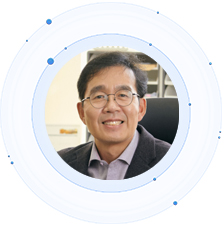
Dr. Gyuhae Park is a Professor of Mechanical Engineering at Chonnam National University, Korea. His career includes serving as a Technical Staff Member at Los Alamos National Laboratory (LANL), USA, from 2002 to 2012. He received the Structural Health Monitoring Person-of-the-Year (POY) Award in 2007 and was elected an ASME Fellow in 2017.
Dr. Park is a prolific researcher in smart sensing and actuation, signal processing, and machine vision for structural health monitoring applications. He has published over 400 highly cited technical articles (accumulating 20,920 total citations with an h-index of 60, according to Google Scholar as of April 2026) and has been consistently ranked among the top 2% of most-cited scientists worldwide by Stanford/Elsevier since 2019. His extensive academic service includes serving as an Associate Editor for eight technical journals, including SHMIJ, JVC, and JIMSS, as well as holding leadership roles in major international conferences. Dr. Park received his Ph.D. from Virginia Tech in 2000.
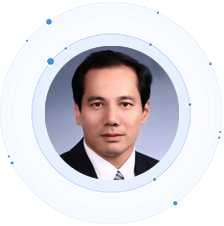
Dr. Xinlin P. Qing is a Distinguished Professor with the National Recruitment Program of Global Experts in China at Xiamen University, a fellow of AAIS. He currently serves as a Chief Scientist of Aircraft Design Engineering Research Center at Xiamen University, and the Director of Intelligent Sensing and Instrument Collaborative Innovation Center at Fujian Province. He was a Senior Technical Fellow and Director of Department of Aviation Health Management at Beijing Aeronautical Science and Technology Research Institute of COMAC before joining Xiamen University. He was the recipients of the National Invention Award of China, the Innovation Award of Industry-University-Research Cooperation in China, NASA Certificates of Recognition and Initial Awards, the Best Paper Awards of EWSHM and APWSHM. His research interests include Multifunctional Sensor Network, Structural Health Monitoring, Aircraft Health Management, Smart Materials and Structures.
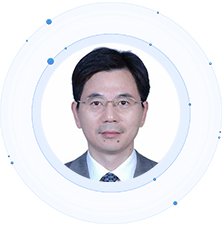
Dr. Jinhao Qiu is currently the Changjiang Chair Professor at the Nanjing University of Aeronautics and Astronautics. He received the Bachelor and Master degrees in mechanical engineering from Nanjing University of Aeronautics and Astronautics, China, in 1983 and 1986 respectively, and the PhD degree in mechanical engineering from Tohoku University, Japan in 1996. He was a research associate from 1986 to 1989 and lecturer 1990 to 1991 at Department of Mechanical Engineering, Nanjing University of Aeronautics and Astronautics. He was a faculty member at the Institute of Fluid Science, Tohoku University from 1992 to 2006, where he was a research associate from 1992 to 1998, an assistant professor 1998 to 2000, an associate professor from 2000 to 2004 and a professor from 2004 to 2006. Since March, 2006, he is a Changjiang Chair Professor at the Nanjing University of Aeronautics and Astronautics. In 2011, he was selected to “The Recruitment Program of Global Experts”. His main research interest is smart materials and structural systems, including development of piezoelectric materials and devices, vibration and noise control, non-destructive testing, and fatigue life predication of composite structures. He has published more than 400 journal papers (including more than 350 SCI-indexed journal papers), 12 review papers, and more than 260 conference papers. He has also received 8 awards, including the 2002 Annual Dynamics, Measurement and Control Awards for Pioneering Achievements in the research of smart materials and structural systems from The Japan Society of Mechanical Engineers. He became the ASME Fellow in 2014.
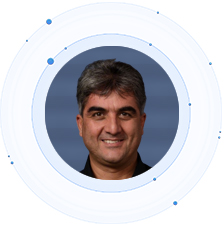
Dr. Rizzo earned a Laurea (5-years degree equivalent to a M.S.) in Aeronautical Engineering from the University of Palermo, Italy, and a M.S. and a Ph.D. in Structural Engineering from the University of California, San Diego. In Fall 2006, he was appointed assistant professor at the University of Pittsburgh’s Department of Civil and Environmental Engineering where he was promoted to Associate Professor with tenure in 2012, and six years later to the rank of Full Professor. Dr. Rizzo’s main research interests are in nondestructive evaluation (NDE) and structural health monitoring (SHM). His work has been funded by the National Science Foundation, Federal Railroad Administration, Association of American Railroads, National Academy of Sciences, Pennsylvania Department of Transportation, the American Society for Nondestructive Testing (ASNT), the IRISE Consortium (University of Pittsburgh), and seed fundings from the University of Pittsburgh.
To date, he authored 135 referred papers, 8 book chapters, 5 conference proceedings volumes, 4 patents, and over 300 among conference proceedings, conference abstracts, and technical reports. Dr. Rizzo was the first person to receive the SHM Person of the Year Award (in 2015) after receiving the Achenbach Medal (in 2012). Both honors are selected by the editors and associate editors of SHM: An International Journal, the top journal on the subject. In 2016, we was honored by the University of Pittsburgh with the Chancellor’s Distinguished Research Junior Scholar Award. The award includes faculty across the whole University, within 12 years of their Ph.D., who have achieved some international standing. Other accolades include two ASNT Outstanding Paper Awards (in 2013 and 2017) all from the ASNT, which elected him Fellow in 2024. He is one of the very few people that has received two ASNT Outstanding Paper Awards since its inception in the sixties.
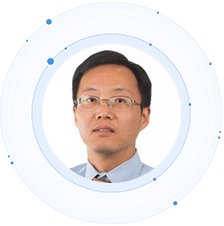
Dr. Yang Wang is a Professor in Civil and Environmental Engineering at the Georgia Institute of Technology. His research interests include structural health monitoring, system identification, model updating, and wireless and mobile sensors. Dr. Wang received an NSF Early Faculty Career Development (CAREER) Award in 2012 and a Young Investigator Award from the Air Force Office of Scientific Research (AFOSR) in 2013. In 2017, he received the Achenbach Medal from the international research community in structural health monitoring. Since 2018, Dr. Wang has served as an Associate Editor for Structural Health Monitoring – an International Journal (SHMIJ). During 2011 – 2022, he was also an Associate Editor for the ASCE Journal of Bridge Engineering.
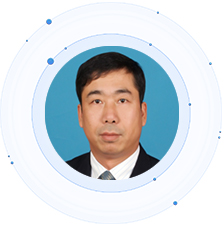
Zhanjun Wu is a professor and doctoral supervisor at Dalian University of Technology and Jiangnan University where he serves as the dean of the School of Fiber Engineering and Equipment Technology. He obtained his Ph.D. in Engineering from Harbin Institute of Technology and conducted research as a visiting scholar at Stanford University in the United States. Research directions include composite materials and structures for extreme environments, mechanics of composite structures,structural health monitoring and digital twins. Over the past five years, he has published over 120 papers in high-ranked international journals such as Nature Communications. He has awarded the first prize of Dalian Technology Invention, second prize of China Composite Materials Society Science and Technology Award, and the China Composite Materials Young Scientist Award.
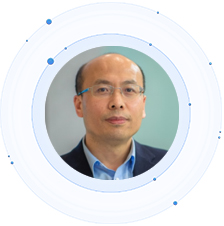
Prof. Fuzhen Xuan is the president of East China University of Science and Technology. He has long been dedicated to research on design, manufacturing, and operation & maintenance technologies for industrial equipment in the nuclear energy and petrochemical sectors. He has made systematic and innovative achievements in creep-resistant design, high-reliability manufacturing, inspection & monitoring, and safety assessment of high-temperature equipment. His honors include the Distinguished Young Scholars funded by the National Natural Science Foundation of China (NSFC), etc. He is the principal investigator of the Innovative Research Group funded by the NSFC. Currently, Prof. Fuzhen Xuan holds several key leadership positions, namely, Director of the Shanghai Key Laboratory of Intelligent Sensing and Detection Technology, Vice Chair of the Chinese Pressure Vessel Society, Vice President of the Chemical Industry and Engineering Society of China, and Member of the Science and Technology Committee for Advanced Manufacturing of the Ministry of Education, and the Deputy Editor-in-Chief of the journal Pressure Vessel Technology.
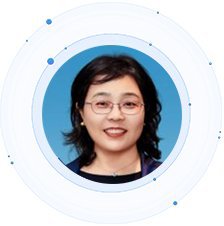
Dr. Xuping Zhang is Professor in the College of Engineering and Applied Sciences, Nanjing University. She received her Ph.D. degree in Electrical Engineering from Southeast University, China in 1995. She was a Research Fellow in University of Texas at Austin from 2000 to 2002. Zhang worked in ETH-Zurich as a visiting professor in 1999. She is the director of the Key Laboratory of Intelligent Optical Sensing and Manipulation, Ministry of Education of China and the Dean of Institute of Optical Communication Engineering and Optical Fiber Sensing of Nanjing University since 2002. So far, she has authored or co-authored more than 300 articles and 200 patents. Now her research interests focus on distributed optical fiber sensing and its applications on structure health-monitoring.
 loading......