
Speakers

SHANGHAI • CHINA


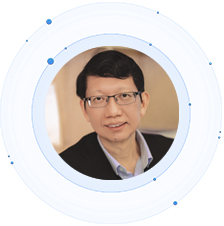
Shan-Tung Tu received his B.Eng. in 1982 and Ph.D. in 1988, both from Nanjing Tech University. He is currently a Professor of Mechanical and Chemical Engineering at East China University of Science and Technology (ECUST). Prior to this, he served as a professor and Vice President at Nanjing Tech University and East China University of Science and Technology, and a guest scientist at The Royal Institute of Technology, Sweden. He was elected as a member of The Chinese Academy of Engineering in 2019.
Driven by the safety concern of the process and power equipment, Prof. Tu has dedicated his career to advancing fundamental and applied knowledge in high temperature structural integrity and engineering, including creep, fatigue fracture, structural integrity monitoring and design of high temperature equipment. He has contributed significantly to the failure prevention of many industry sectors and the development of the new generation of process and power equipment.
Prof. Tu has authored more than 400 peer‑reviewed technical and academic papers, with total citations exceeding 25,000. He received a number of distinguished awards, including the China National Science and Technology Progress Award, the National Technology Invention Award, the China Youth Science and Technology Award, the Special International Prize of PSG-IMechE, the Excellence in Innovation Award of SAE international, the ASME Best Paper Award and so on.
He holds key academic fellowships and leadership positions: Fellow of the Chemical Industry and Engineering Society of China; Honorary President of the China Pressure Vessel Institution (since 2010), Honorary President of the Materials Institution (since 2015), Chinese Mechanical Engineering Society; Chair of the China Structural Integrity Consortium; Chair of the Asia‑Oceania Regional Committee of the International Council for Pressure Vessel Technology; Member of the Reliability Committee of IFToMM; and Executive Member of the Global Power and Propulsion Society. He is also an Honorary Professor at the University of Nottingham, UK, among others.
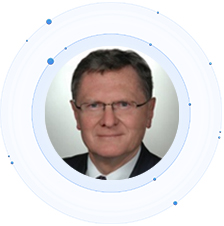
Prof. Wiesław Ostachowicz
Education and Academic Titles
Prof. Wiesław Ostachowicz was educated in Mechanical Engineering. He obtained both his PhD and DSc degrees in this field. In 1989, he was appointed Professor. He has been a Member of the Polish Academy of Sciences since December 2016.
Research Profile
Prof. Ostachowicz has led research in dynamics at the Institute of Fluid-Flow Machinery, Polish Academy of Sciences (IMP PAN), for over forty years. His expertise covers several key sub-disciplines, including:
His work combines both theoretical and experimental approaches. His research has particularly focused on damage assessment and applications of smart materials.
A significant part of his work concerns guided wave propagation, leading to the development of advanced vibroacoustic and ultrasonic methods for damage detection using smart sensor technologies. These methods have demonstrated high sensitivity in detecting small cracks in both metallic and composite structures, without limitations related to load conditions, boundary constraints, temperature, or environmental factors.
International Experience
Publications and Scientific Output
Prof. Ostachowicz is the author of an extensive body of scientific work, including:
He has also authored:
His publications focus primarily on structural health monitoring, damage detection, structural dynamics, and advanced signal processing. His work has been published by leading international publishers such as Springer, Wiley, Kluwer, World Scientific, and CRC Press.
Research Projects and Evaluation Activities
Prof. Ostachowicz has participated in more than 25 international research projects as a coordinator, Work Package leader, or principal contractor. These projects have included collaborations with:
He has also served as an evaluator for major funding bodies, including:
Patents
Prof. Ostachowicz is the co-inventor of four patents, including a European Patent Office patent:
Editorial Activity
He currently serves as Editor or Associate Editor for several leading journals:
Supervision and Academic Service
Prof. Ostachowicz has supervised 20 PhD dissertations. He has also acted as a reviewer and examiner for doctoral theses and professorial appointments in numerous countries, including:
United Kingdom, South Africa, USA, Italy, France, Japan, Spain, Hong Kong, Singapore, Austria, Sweden, Australia, Switzerland, and the Netherlands.
Awards and Honours
Prof. Ostachowicz has received several prestigious distinctions, including:
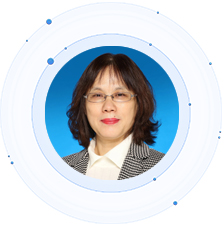
Hui Li, Professor in civil engineering and computer science at Harbin Institute of Technology. She is the member of China Academy of Science and member of the World Academy of Sciences. Her interests include structural health monitoring, AI for Science and Engineering, and Metamaterials. She is the former president of IASCM. She is the coauthors of more than 200 papers (Science, nature, etc) and keynote lectures. She is the receipt of ASCE G W Housner Medal and ASCE R H Scanlan Medal.
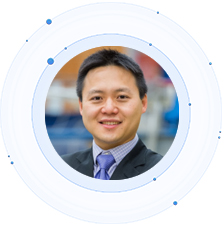
Professor, Department of Civil Engineering
Director, Smart Infrastructure and Construction Research Excellence Cluster
The University of British Columbia, Vancouver, Canada
Prof. Yang is a fellow of Canadian Academy of Engineering, Director of Smart Infrastructure and Construction Research Excellence cluster and a Professor in the Department of Civil Engineering at The University of British Columbia. Prof. Yang is a world-renowned researcher acclaimed for his ground-breaking innovation in performance-based design, structural simulation and testing, robotic inspection and construction and high-performance, carbon-neutral and resilient infrastructure. Prof. Yang is one of the 19 voting members of the Standing Committee for Earthquake Design, which is responsible for writing the seismic design provision of the 2020/2025 National Building Code of Canada (NBCC). Prof. Yang is also a committee member of S16, which is responsible for writing the design provision of steel structures in the Canada. Prof. Yang’s work has been well recognized by his colleagues, he is the recipient of the 2020 Meritorious achievement award from Engineers & Geoscientists British Columbia Canada, which is the highest achievement award given to a professional engineer (P. Eng.) in British Columbia, Canada, 2019 Technology award from the New Zealand Concrete Society and the 2014 CISC H.A. Krentz award for the highest impacted steel research from the Canadian Institute of Steel Construction.
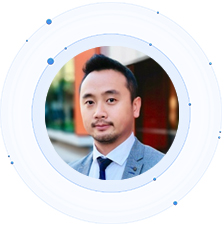
(Alex) Ching-Tai Ng is a Professor and Academic Lead (Research) in the School of Civil Engineering and Construction Management at Adelaide University. He served as Deputy Head of School in 2017, Director of Graduate Studies in the Faculty of Engineering, Computer & Mathematical Sciences from 2018 to 2022, and Associate Dean of Graduate Studies in the Faculty of Sciences, Engineering and Technology at The University of Adelaide from 2023 to 2025. He earned his B.Eng. with First-class Honours and M.Phil. from the City University of Hong Kong, and his Ph.D. from The University of Queensland. His research interests include Structural Health Monitoring (SHM), nondestructive evaluation (NDE), ultrasonic guided waves, wave propagation, vibration testing, modal analysis and system identification. Prof. Ng exerts significant professional influence worldwide through his involvement in technical committees, conference organisation, and journal and competitive grant refereeing. He is the Co-Editor-in-Chief of Engineering Structures (Elsevier), Associate Editor of Structural Health Monitoring (SAGE) and Ultrasonics (Elsevier). He is a Council Member of the International Society for Structural Health Monitoring of Intelligent Infrastructure (ISHMII), and an Executive Committee Member of the Australian Network of Structural Health Monitoring (ANSHM).
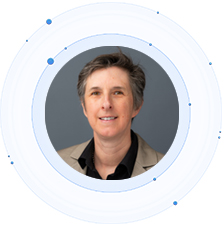
Dr. Kara Peters is a Distinguished Professor of Aerospace Engineering at North Carolina State University and the Associate Dean for Graduate Programs and Postdoctoral Affairs in the College of Engineering. Following her PhD, Dr. Peters worked as Post-Doctoral Researcher in the Laboratory of Applied Mechanics at the Ecole Polytechnique Fédérale de Lausanne (Swiss Institute of Technology at Lausanne). Dr. Peters is a fellow of SPIE and ASME. She is the deputy editor of the journal Applied Optics. From 2015-2018, Dr. Peters served as a rotator as the Program Manager of the Mechanics of Materials and Structures Program at the National Science Foundation. Dr. Peters’ research focuses on the development of new experimental mechanics techniques for extreme environments. Many of the techniques are based on optical fiber sensors. Most recently her laboratory has investigated the use of acousto-optic effects in optical fibers for health monitoring of structures based on ultrasound wave propagation. This research has led to advances in the measurement of the conversion of structural acoustic modes into sensors and signal amplification devices.
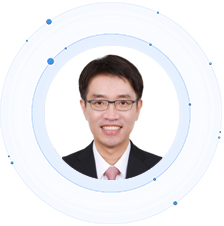
Jinkyu “JK” Yang is a Professor in the Department of Mechanical Engineering at Seoul National University. Previously, he served as a professor in the Department of Aeronautics & Astronautics at the University of Washington from 2013 to 2022. Dr. Yang earned his Ph.D. and M.S. in Aeronautics & Astronautics from Stanford University and a B.S. from KAIST, Korea. His professional background includes a postdoctoral fellowship at Caltech and industry experience as a Senior Engineer at Samsung Electronics. Dr. Yang also held visiting professorship with Princeton University, CNRS-LAUM, and ETH-Zurich. His research focuses on the development of novel material and structure concepts (e.g., metamaterials, deployable structures), nonlinear structural dynamics, and NDE/SHM technologies. This work has been featured in major media outlets such as Reuters, NSF News, and PBS. Dr. Yang is an AIAA Associate Fellow, an NSF CAREER Award recipient, and an Associate Editor for the AIAA Journal of Aircraft.
 loading......